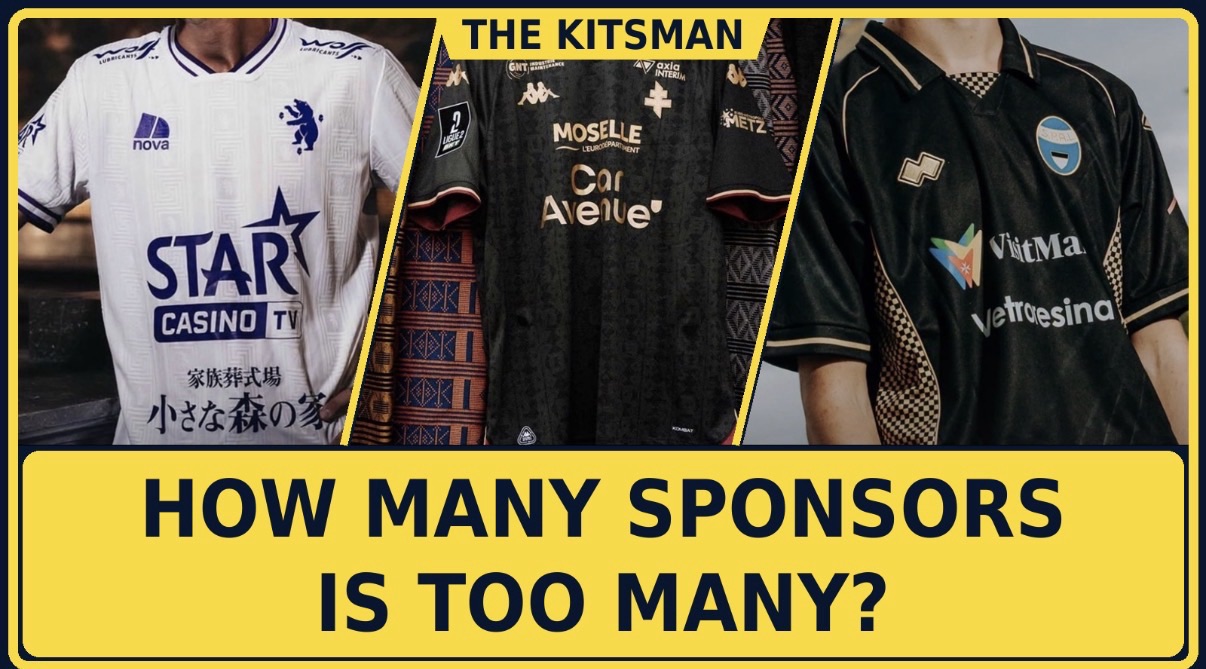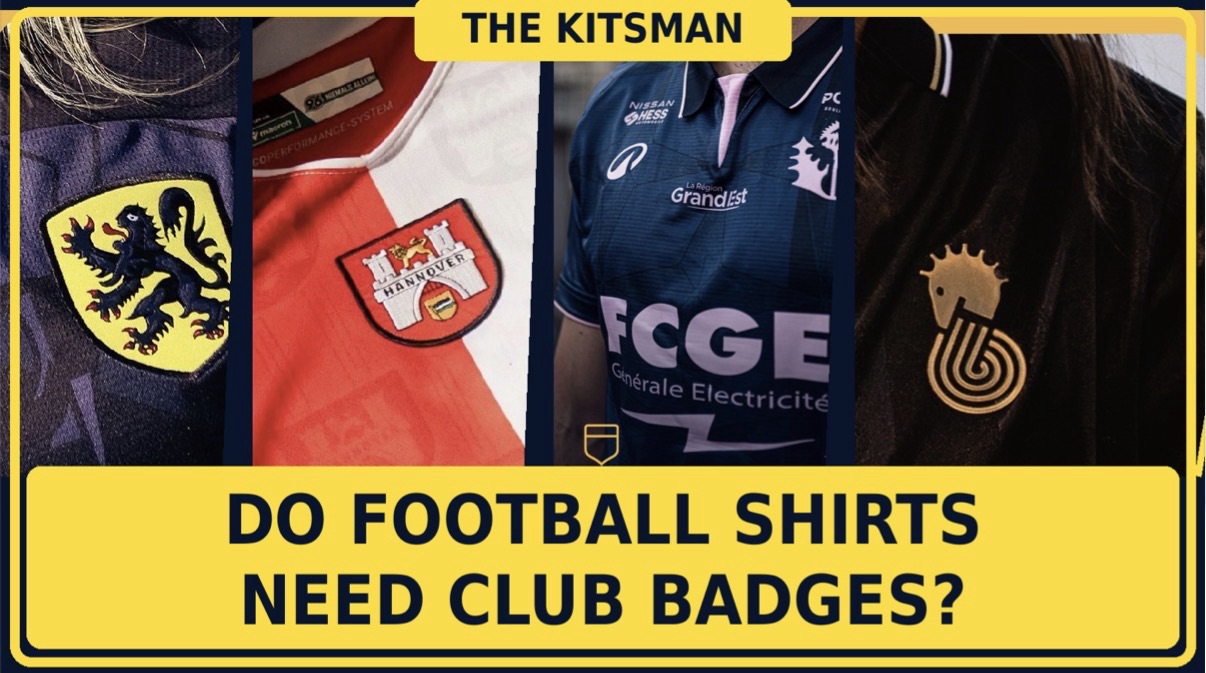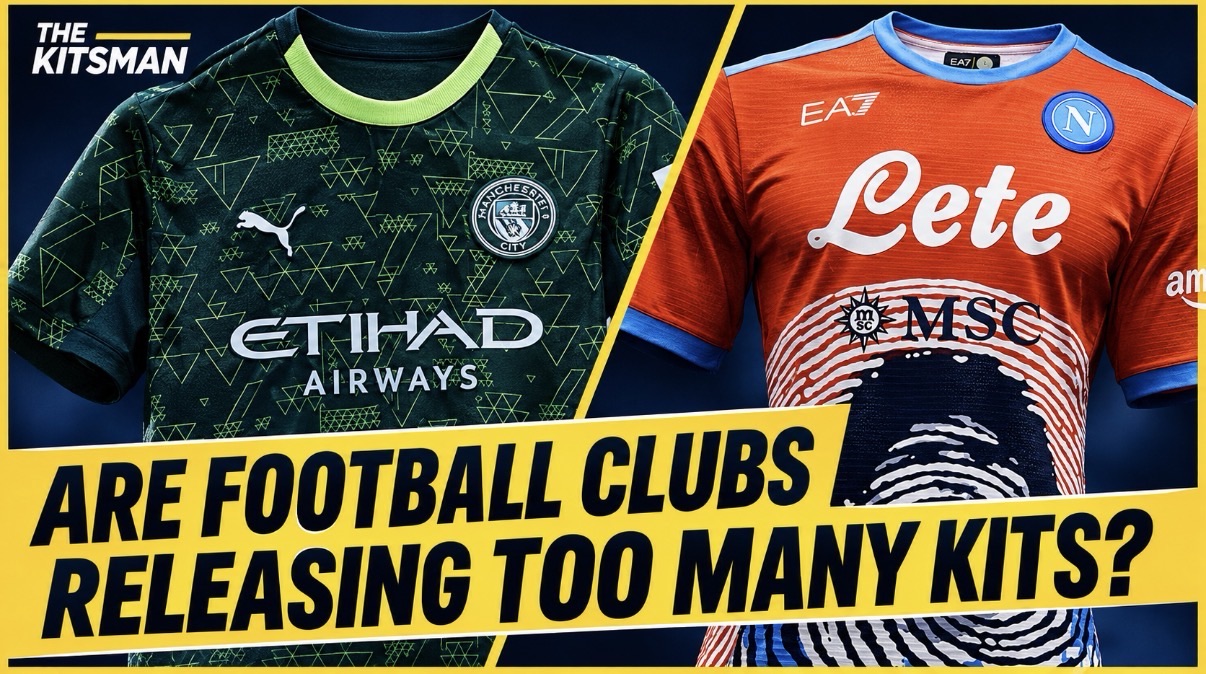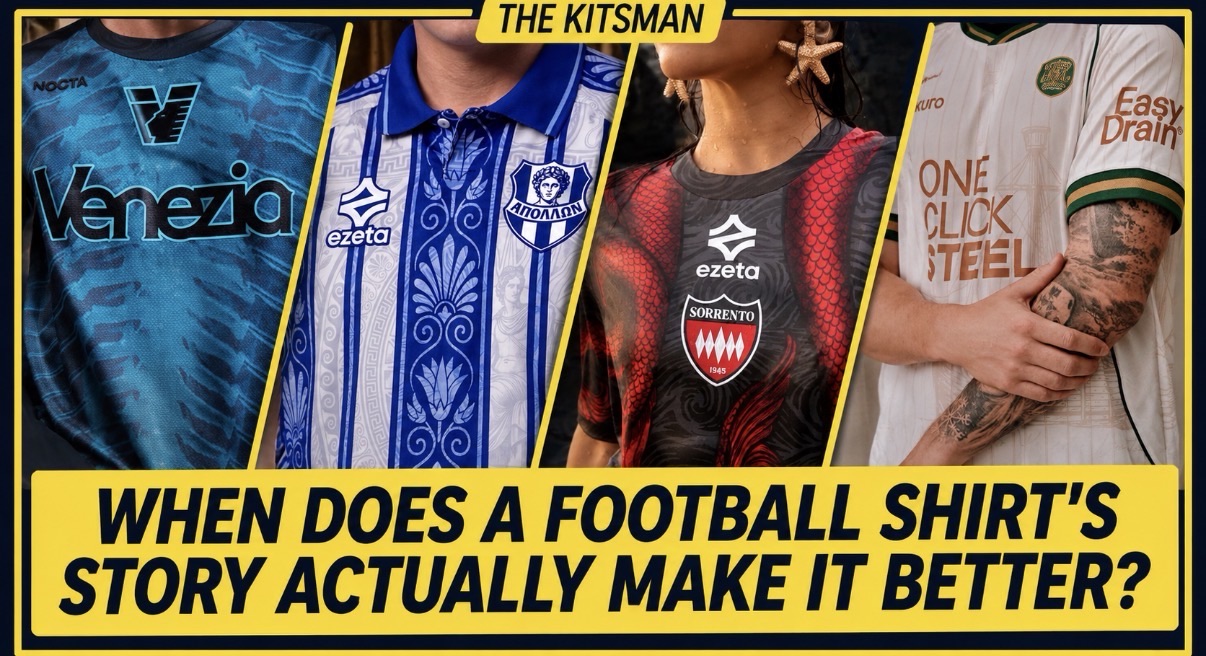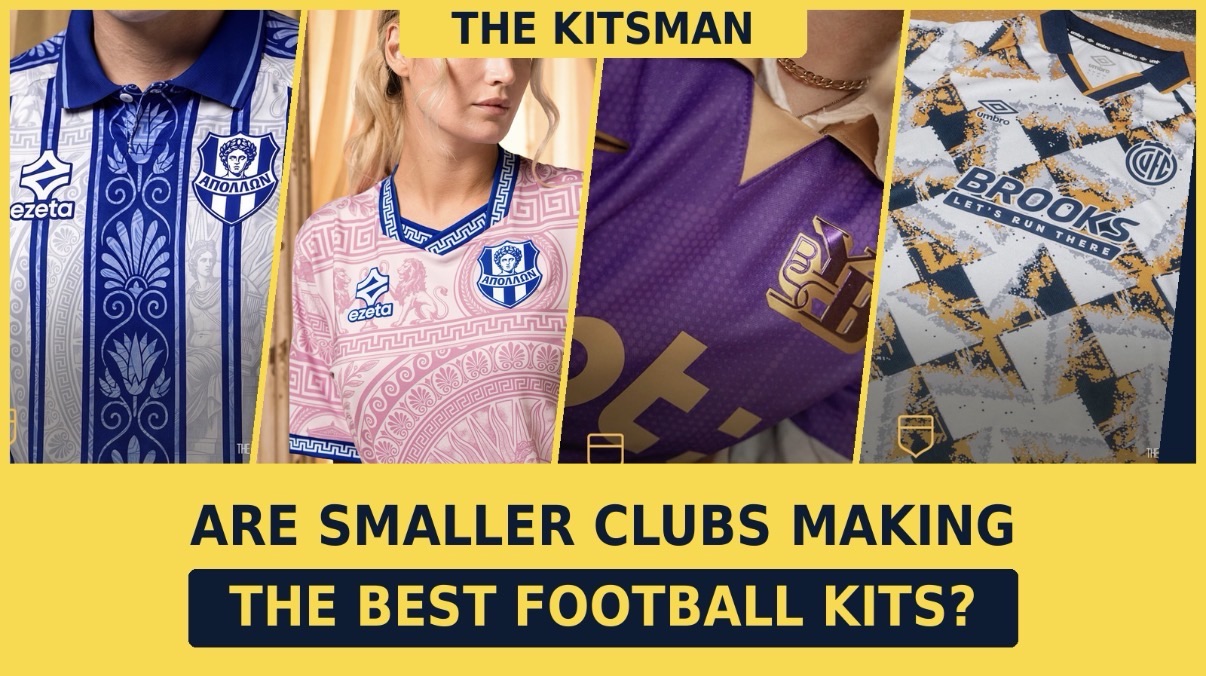
The biggest clubs have the biggest manufacturers, enormous budgets and global audiences. So why are some of the most interesting football shirts coming from teams most supporters have barely heard of?
There’s something slightly ridiculous about a club playing outside Europe’s top divisions producing a shirt that looks more interesting than the latest offering from a Champions League giant.
Yet the more football shirts we cover at The Kitsman, the more often it seems to happen.
While the biggest clubs dominate launch campaigns and shirt sales, some of the most imaginative designs are emerging from smaller teams in Greece, Italy, Portugal and beyond. These clubs aren’t necessarily spending more money or employing better designers. They’re simply producing shirts that feel a little less predictable.
And we reckon there’s a reason for it.
Smaller Clubs Have More to Gain by Being Different
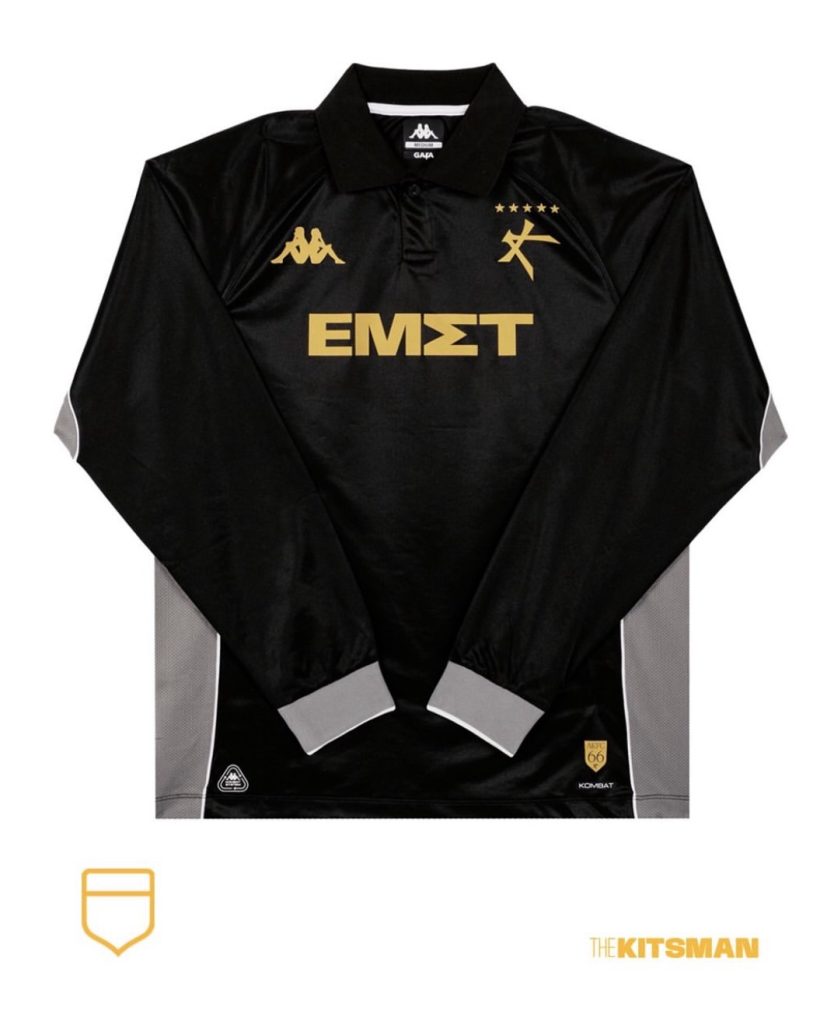
Take Athens Kallithea. Their partnership with Kappa and design studio Bureau Borsche has produced a recognisable aesthetic that extends well beyond the football pitch. Their latest black-and-gold third shirt is beautifully understated, while their campaigns draw on the music and creative culture of the Athens neighbourhood they represent.
It’s difficult to imagine the same approach being quite so effective if the club were simply handed a standard manufacturer template.
Then there’s FC Südtirol. Their 2026/27 third shirt, produced by Erreà, incorporates delicate vine-leaf illustrations inspired by the vineyards of South Tyrol. It’s a predominantly cream design that could easily have been rather forgettable. Instead, the intricate detailing gives it an identity that belongs specifically to the club and its surroundings.
Marítimo offer another example. Hummel have incorporated ships’ wheels and traditional rope into the Portuguese club’s wine-coloured third shirt, creating something that immediately reflects Madeira’s maritime heritage.
These aren’t necessarily revolutionary ideas. Football shirts have celebrated local identity for generations. What’s striking is how effectively smaller clubs are turning those connections into designs that appeal well beyond their existing supporters.
For a club with a relatively limited international audience, an exceptional shirt can be an opportunity to reach thousands of people who might otherwise never encounter the team.
Are the Big Clubs Playing It Too Safe?
There’s a fairly obvious explanation for why the biggest clubs can appear more conservative.
Manchester United, Real Madrid and Liverpool have enormously valuable visual identities. Their traditional colours and familiar shirt designs are recognised around the world. Stray too far from those expectations and there will inevitably be supporters unhappy with the result.
There’s also little commercial incentive to take enormous risks with every release. A traditional home shirt from a global club will attract considerable attention regardless of whether the design is particularly adventurous.
A smaller club faces a different challenge.
If your shirt is only likely to be noticed by existing supporters, doing something unusual can suddenly make commercial sense. A distinctive design might attract collectors overseas, generate coverage across football media and introduce the club to an entirely new audience.
That doesn’t mean smaller clubs have complete creative freedom. They still have budgets, sponsorship agreements, supporter expectations and manufacturers to satisfy. Nor does it mean the giants aren’t capable of producing wonderful shirts.
But the incentive to stand out can be considerably stronger when you’re competing for attention rather than already guaranteed it.
The Manufacturers Deserve Some Credit Too
It’s also worth considering who’s making these shirts.
Nike, Adidas and Puma dominate much of elite football, but manufacturers such as Erreà, Macron, Hummel, Kappa and Ezeta are producing some terrific work elsewhere.
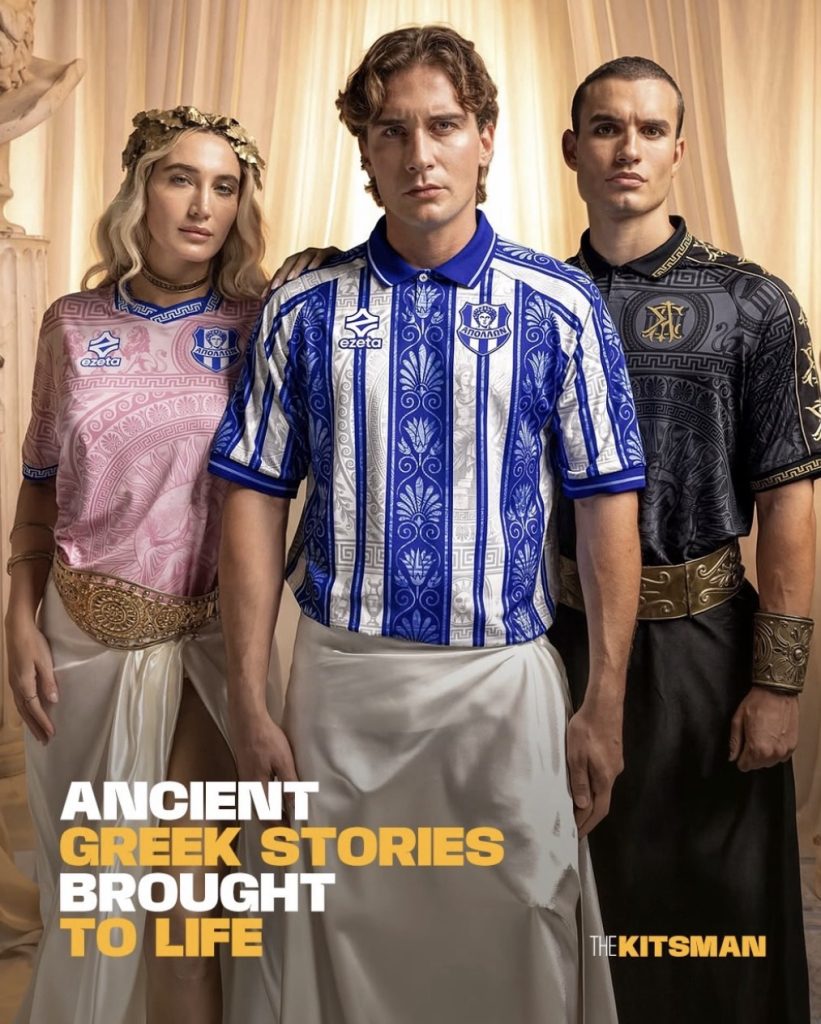
The relationship between club and manufacturer can be particularly important. A bespoke design that draws on a specific local identity feels considerably more meaningful than a generic pattern that could be transferred between several teams.
Of course, a smaller manufacturer doesn’t automatically guarantee greater creativity, just as a global brand doesn’t automatically mean another uninspiring template. The distinction is how much attention goes into making a shirt feel individual.
And there’s no shortage of examples proving that approach works.
We’ve seen Erreà celebrate the vineyards of South Tyrol, Hummel embrace Madeira’s maritime history and Kappa help Athens Kallithea establish an identity that reaches into fashion and music.
The results speak for themselves.
Perhaps We’re Looking in the Wrong Places
We don’t believe smaller clubs are universally producing better football shirts than the biggest teams. That would be a fairly ridiculous claim.
But we do think they’re responsible for a disproportionate number of the designs that make us stop scrolling.
There’s another factor worth acknowledging. We see almost every major club launch, including the ordinary ones, while smaller clubs often reach international audiences precisely because they’ve produced something exceptional. That can make the comparison look more one-sided than it really is.
Even allowing for that, the creativity emerging from less fashionable corners of football deserves considerably more recognition.
Perhaps the biggest difference is that an ordinary shirt from a major club will still sell. An extraordinary shirt from a smaller club might actually change how people see that team.
So which smaller football club do you think is consistently producing better kits than the giants?
And are they genuinely more creative, or are the biggest clubs simply too afraid to take risks?
Follow The Kitsman for more football shirt news, features and opinions: