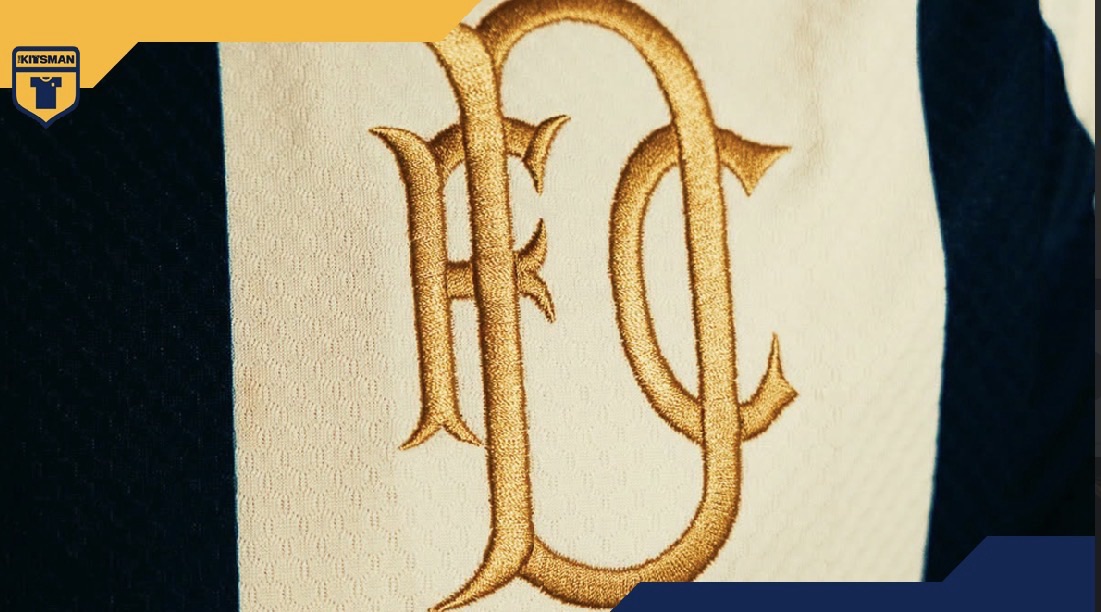
Some football shirts celebrate a trophy, a famous player or an anniversary. FC Dordrecht’s new third shirt goes considerably further back, to a time when the people of the Dutch city were fighting for a greater say in how they were governed.
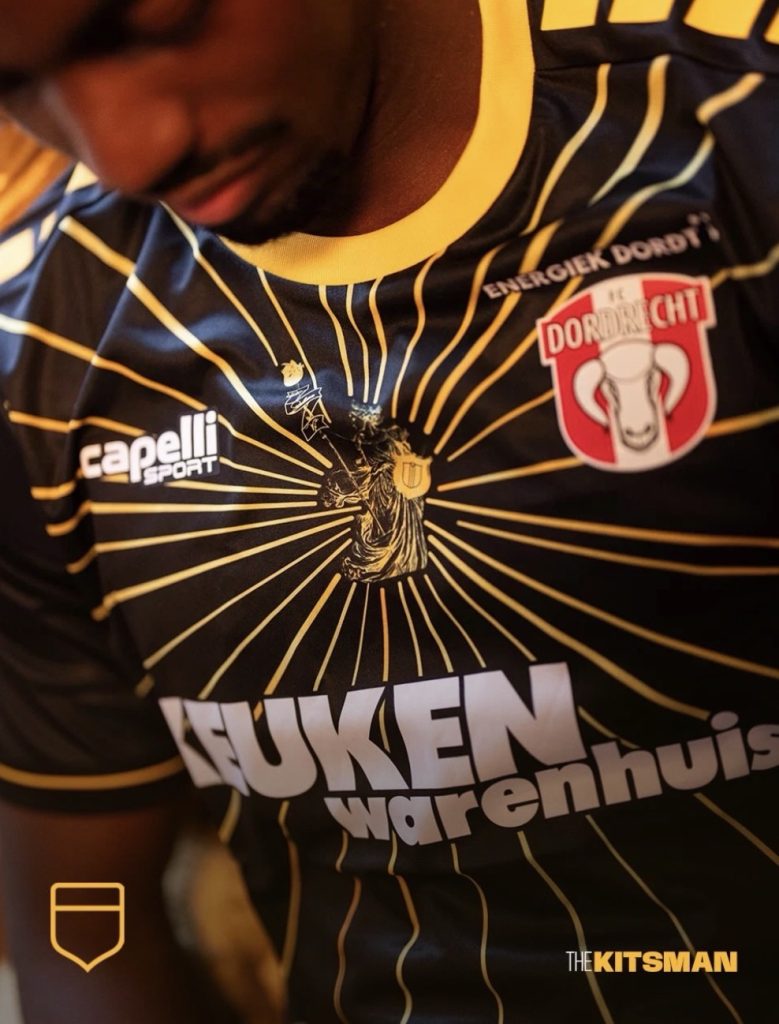
Created with Capelli Sport, the club’s 2026/27 third kit draws inspiration from the city’s political history and its Maiden of Freedom, or Vrijheidsmaagd.
It’s also a particularly good-looking football shirt.
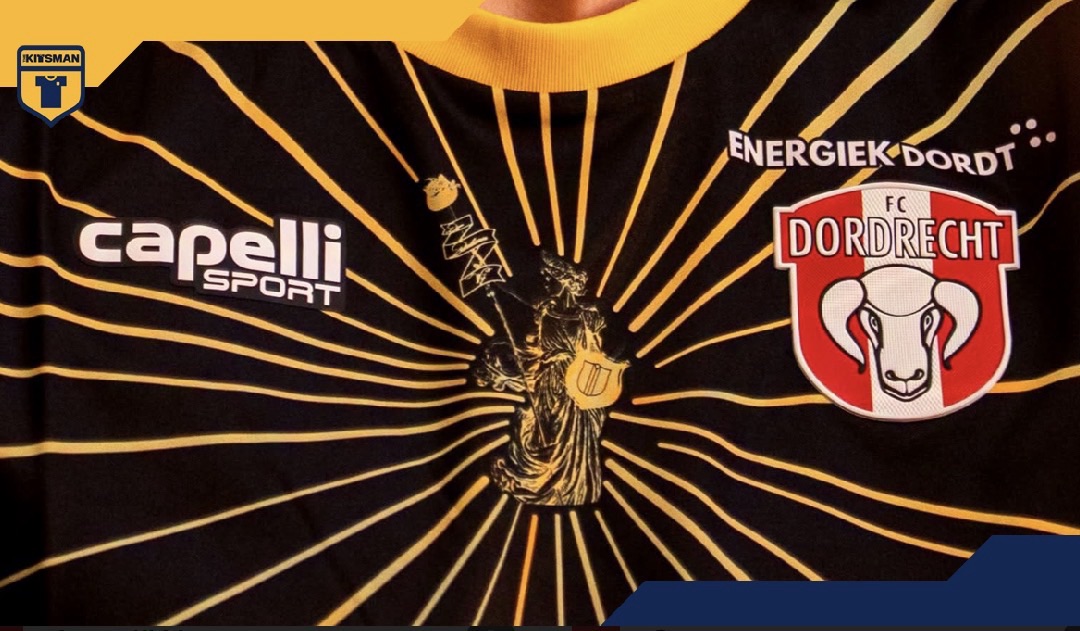
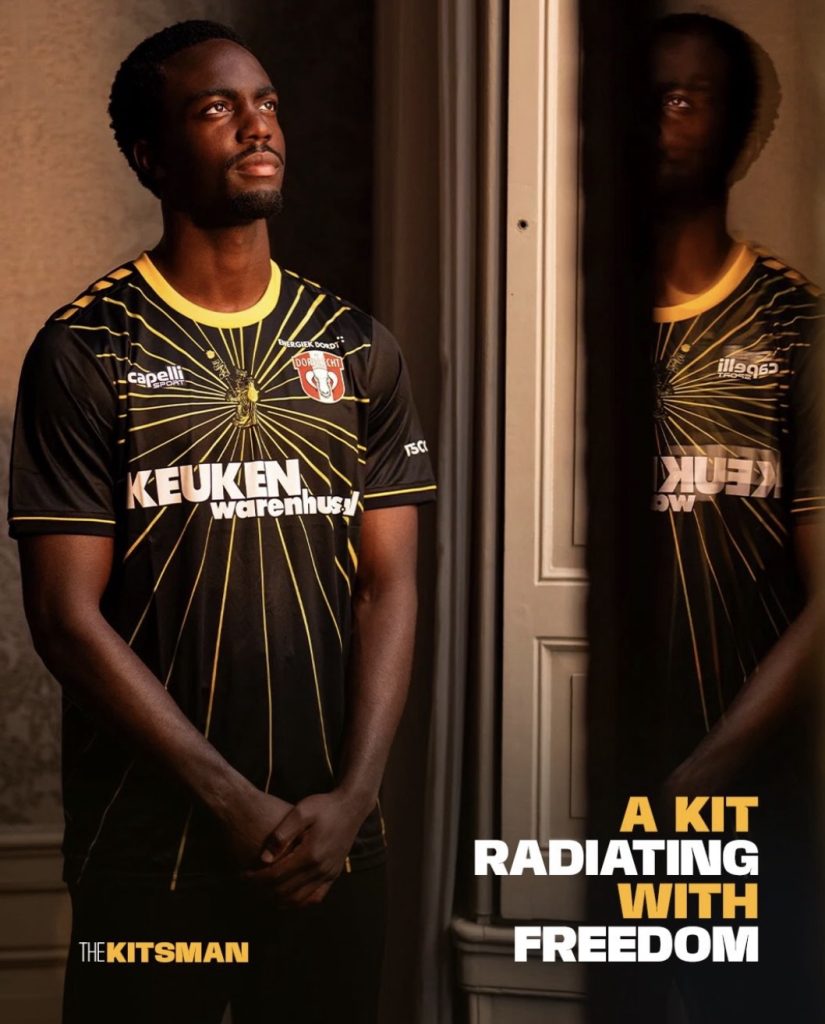
The black base is covered by striking golden rays spreading across the front, radiating from the Maiden of Freedom herself. The figure represents liberty, while the rays reflect the ideals associated with the city’s historic struggle.
It’s a bold design, but one with a genuine connection to Dordrecht.
A symbol of Dordrecht’s history
During the 1780s, Dordrecht became involved in the Dutch Patriot movement, as citizens challenged established political authority and demanded greater influence over how they were governed.
In 1783, the local citizen militia De Vrijheid, meaning Freedom, emerged from this political climate. The Maiden of Freedom became a symbol of the ideals its members sought to defend.
More than two centuries later, that imagery has found its way onto a football shirt.
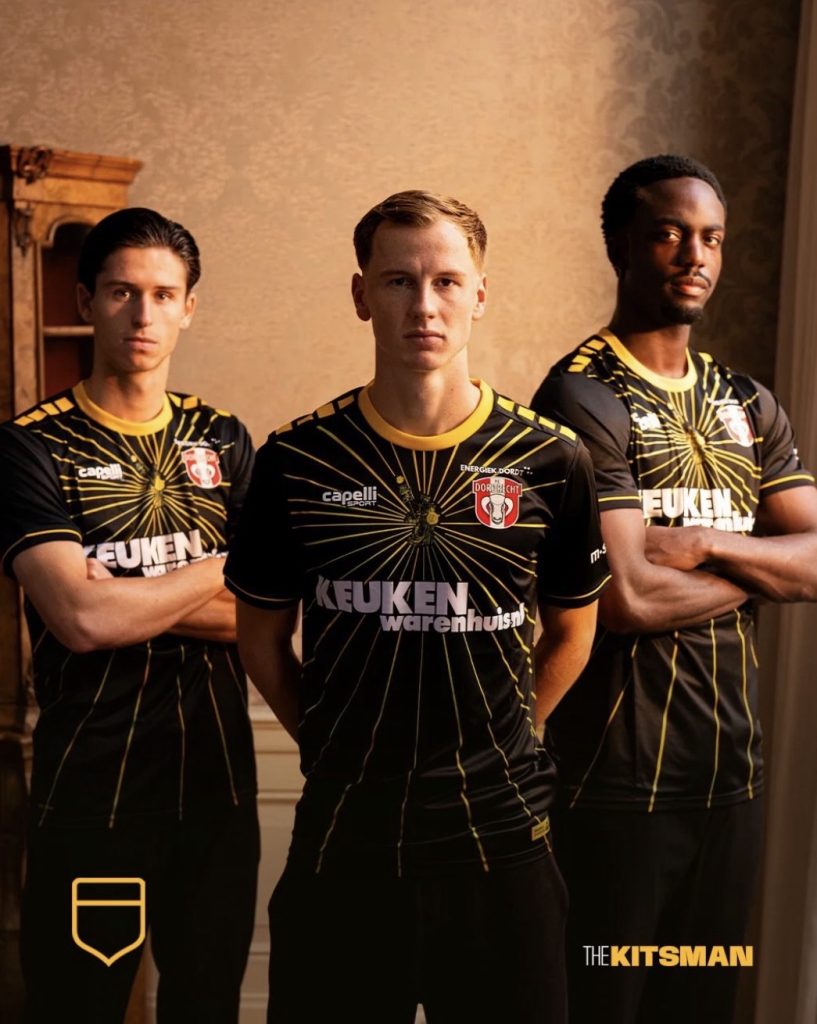
The golden rays are particularly effective against the black background. There’s something almost theatrical about the design, although the symbolism gives it considerably more substance than a conventional sunburst graphic.
We’ve seen clubs increasingly explore the history of their hometowns through shirt design. Ascoli’s recent Ezeta collaboration transformed the medieval architecture of an Italian city into an elaborate black-and-white design.
Dordrecht have taken a different approach. Rather than illustrating the city itself, they’ve chosen a symbol representing what its people once fought for.
MORE FROM THE KITSMAN
Ascoli’s New Shirt Is a Work of Art. But Would You Wear It?
Ezeta turns the medieval towers and architecture of Ascoli Piceno into one of the season’s most elaborate football shirts.
The Dordrecht shirt also carries the historic words Dese beminnen wy, while Republiek Dordrecht appears among its additional details.
A special label features supporter Jan van Nieuwenhoven, known as Jan Republiek, connecting the city’s history with the people supporting the club today.
Another chapter in the club’s history
What’s particularly interesting is that Dordrecht have already explored the city’s history with their 2026/27 away shirt.
That design commemorates the First Free States Assembly of 1572, an important moment in the Dutch struggle for independence.
The third kit moves the story forward to 1783, shifting the focus towards the political rights and freedoms of individual citizens.
It gives the two shirts a relationship beyond simply belonging to the same season.
Capelli Sport have shown a similar interest in symbolism elsewhere. Their 2026 Cabo Verde home shirt uses geometric patterns representing the connections between the country’s islands and communities.
Both designs demonstrate how a manufacturer can incorporate local identity without relying on a conventional anniversary badge or an obvious landmark.
Dordrecht unveiled the third shirt on 9 November, World Freedom Day, with its first scheduled appearance against Heracles Almelo on 14 November.
A design that stands on its own
There’s always a risk that the explanation behind a football shirt becomes more interesting than the shirt itself.
That isn’t really a problem here.
Black and gold is a combination that’s difficult to get badly wrong, and Capelli have made the most of it. The rays dominate without making the design feel overcrowded, while the yellow detailing brings everything together.
There’s an interesting contrast with Osasuna’s 2026/27 home shirt, which incorporates the lost paving mosaics of Pamplona’s Plaza del Castillo into a much more understated design.
Osasuna hide their historical reference within the fabric. Dordrecht make theirs impossible to miss.
Neither approach is necessarily better, but Dordrecht’s certainly makes an impression.
MORE FROM THE KITSMAN
Osasuna’s 2026/27 Home Kit Revives Pamplona’s Lost Mosaics
Macron brings a vanished piece of the city’s history back through the design of Osasuna’s traditional red shirt.
We’ve previously questioned whether football shirts really need elaborate stories, particularly when the explanation sounds more impressive than the finished design.
Dordrecht make a persuasive case for getting the balance right.
The history adds something worthwhile, but you don’t need to know anything about 18th-century Dutch politics to appreciate the shirt.
That’s probably the best compliment you can give a design like this. It tells a story for those who want to discover it, while still looking excellent on the pitch.
Further reading: Dordrecht’s 1783 inspiration and the supporter featured on the shirt · The history behind Dordrecht’s 2026/27 away shirt
Credits: FC Dordrecht · Capelli Sport
For more football shirt releases, history and opinion, follow The Kitsman on X and Instagram.