At first glance, Dundee FC’s latest third shirt looks like a smart exercise in traditional football design. Navy and white stripes, gold detailing and a retro-inspired crest give Macron’s latest creation a distinctly classic appearance. Yet the story behind it stretches far beyond Scotland, with the Dark Blues turning to one of Mexico’s biggest clubs for inspiration.
Released on 27 October, Dundee’s 2026/27 third kit pays tribute to CF Monterrey, the Mexican giants known as Rayados, or ‘The Striped Ones’. It is an unusual source of inspiration for a Scottish Premiership club, particularly when the two sides are separated by thousands of miles. However, this is more than a borrowed colour scheme. The shirt represents a genuine relationship between two football clubs, raising an interesting question about how partnerships might influence the next generation of football kits.
Why Have Dundee Taken Inspiration From Monterrey?
Dundee and Monterrey might seem unlikely partners, but their relationship has a practical footballing purpose. In November 2024, Monterrey announced a sporting collaboration agreement designed to support the development of young players and provide opportunities for academy talent to gain experience in European football. The arrangement has since seen several players associated with the Mexican club spend time at Dundee, including César Garza, Víctor López and Aldahir Valenzuela.
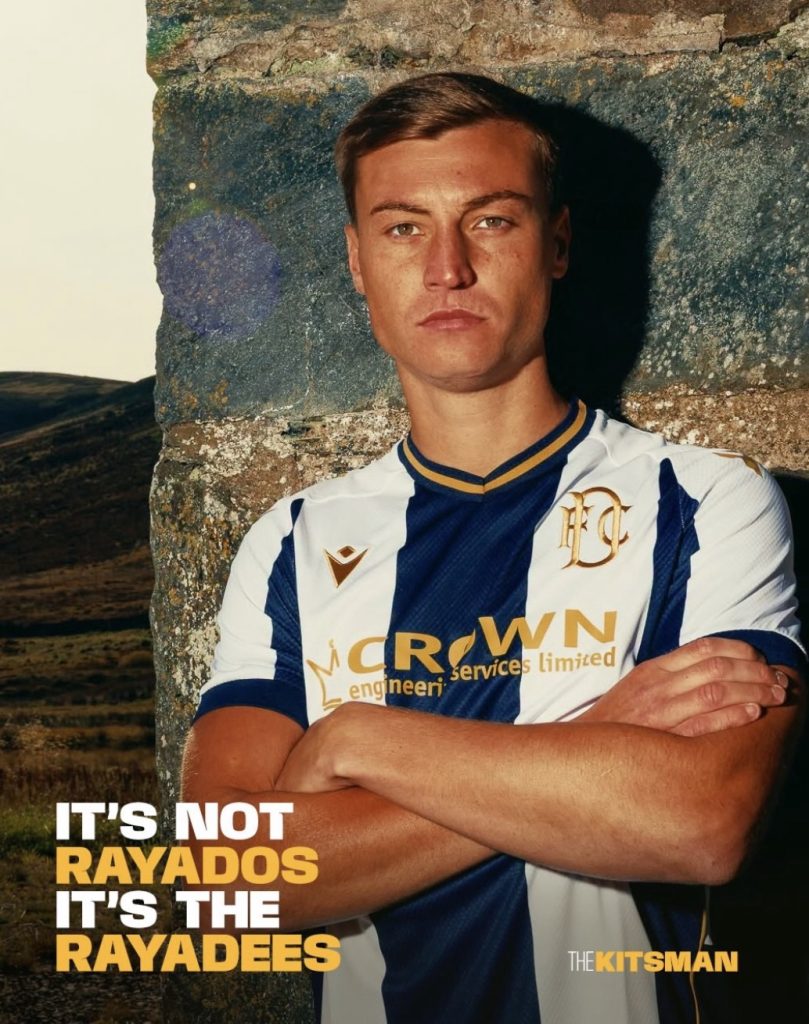
The new shirt brings that relationship into the spotlight in a way that player development agreements rarely achieve. Monterrey’s distinctive navy and white stripes are among the most recognisable designs in Mexican football, and Dundee have adapted that identity into a shirt that still feels connected to their own traditions. The result is a design that acknowledges another club without completely abandoning the visual identity of the team wearing it.
There is something particularly interesting about the direction of this collaboration. Football shirts have increasingly become vehicles for storytelling, often drawing inspiration from local landmarks, architecture or historical moments. Dundee have taken a different approach, using their third kit to celebrate an international relationship that exists within the game itself. Rather than inventing a connection to justify a design, the club already had a story worth telling.
A Classic Design That Doesn’t Need Much Explanation
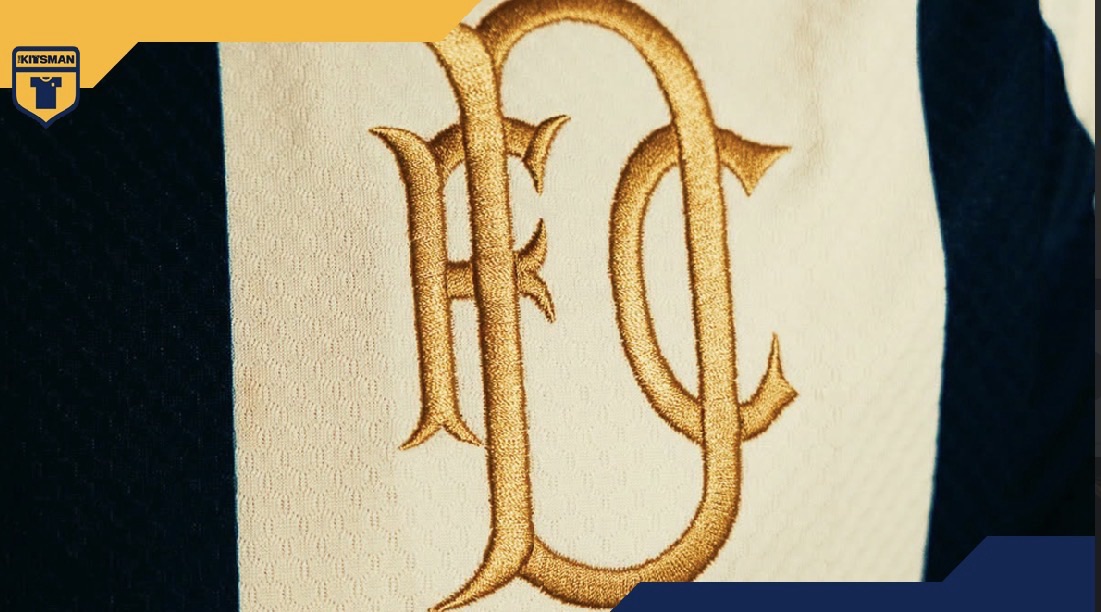
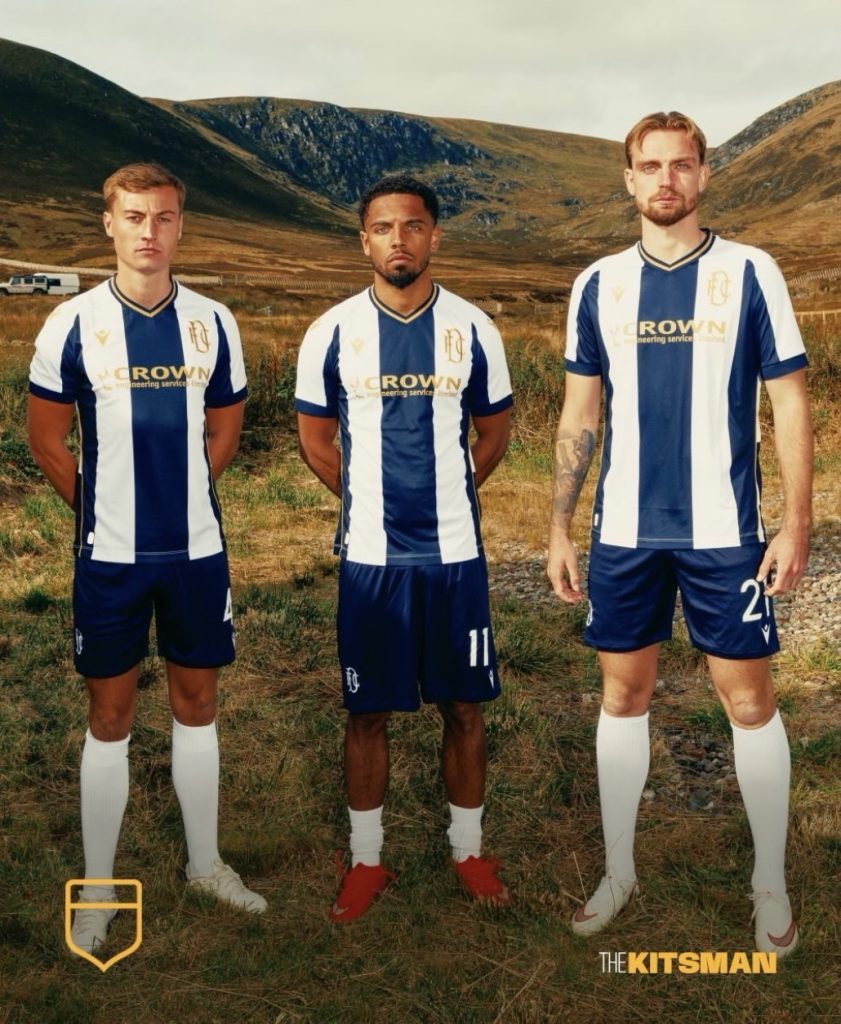
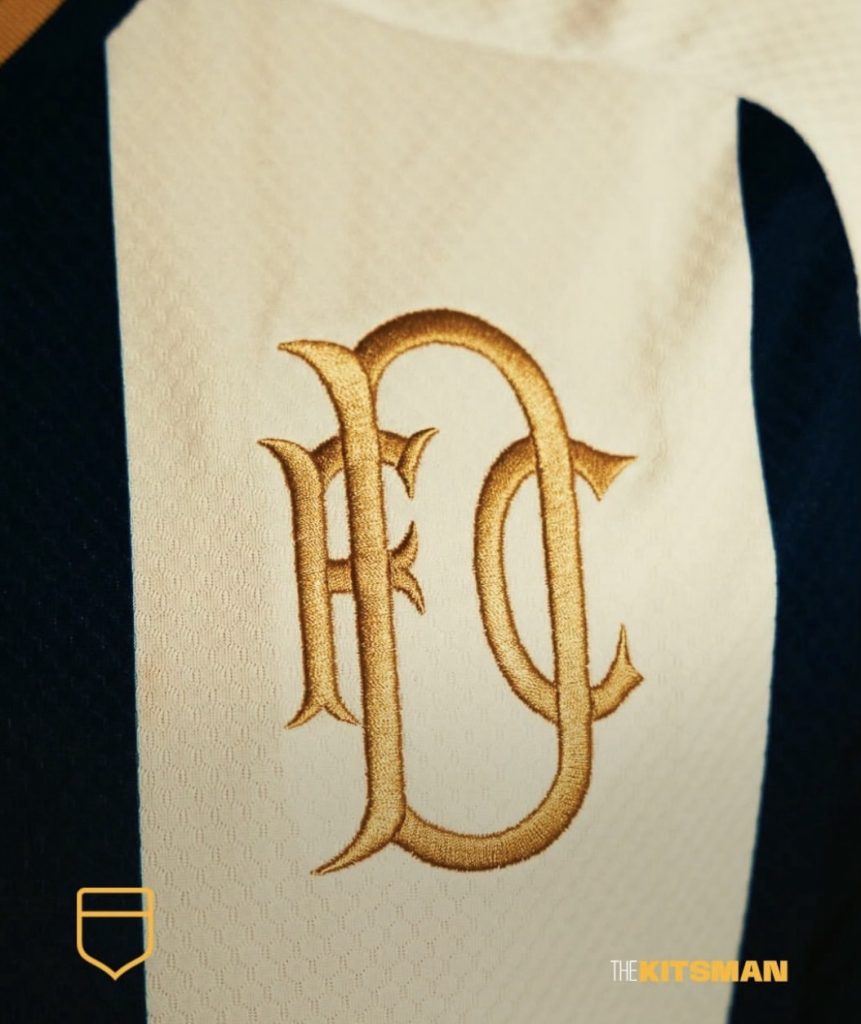
Macron have kept the execution relatively straightforward. Broad navy and white vertical stripes dominate the front of the shirt, while gold detailing provides a contrast across the collar, manufacturer branding and Crown Engineering sponsorship. A traditional-style interlocking DFC monogram replaces the usual club crest, giving the shirt a distinctly retro character without relying on an elaborate pattern or graphic treatment.
The gold detailing is particularly effective because it brings the various elements together. Sponsor logos can sometimes disrupt an otherwise attractive football shirt, but the matching gold treatment helps Crown Engineering’s branding sit comfortably within the overall design. Navy shorts and white socks complete a combination that feels equally suited to the pitch and the growing market for football shirts worn casually.
Perhaps the strongest aspect of the design is its restraint. There is no need for an oversized commemorative graphic or a complicated visual explanation. Supporters unfamiliar with Monterrey can appreciate the shirt on its appearance alone, while those aware of the relationship have an additional reason to find it interesting. It is a useful reminder that the story behind a football shirt should complement its design rather than compensate for it.
Could Club Partnerships Become the Next Big Kit Trend?
The relationship between Dundee and Monterrey opens up a wider conversation about the commercial and creative possibilities of international football partnerships. Clubs across different continents increasingly collaborate through player development, scouting networks and commercial arrangements, yet relatively few of those relationships become visible through the shirts supporters actually wear.
A third kit provides an obvious opportunity to change that. Home shirts generally carry greater expectations around tradition, while away and third designs offer manufacturers more freedom to experiment. Taking inspiration from a partner club can introduce a different football culture to an existing fanbase while creating interest in markets that might otherwise pay little attention to the team releasing the shirt.
For Dundee, the connection with Monterrey offers potential exposure to Mexican supporters, while the Scottish club’s interpretation of the famous Rayados stripes gives the partnership a tangible identity. That does not automatically translate into significant international sales or a larger following, but it creates a more convincing reason for supporters outside Scotland to take notice. In an increasingly crowded football shirt market, that kind of authentic connection can be more valuable than another abstract design concept.
There is also a distinction worth making between collaboration and imitation. If clubs begin borrowing famous designs simply because they are recognisable, the novelty could disappear quickly. Dundee’s shirt works because there is an established relationship behind it. The design is not presented as a random tribute to a fashionable overseas team, but as an acknowledgement of something already happening between the two clubs.
A Kit Launch With Another Purpose
The Monterrey connection is not the only story attached to the release. Dundee have also continued their relationship with SSAFA, the Armed Forces charity, with £5 from every kit sold going towards supporting serving personnel, veterans and their families.
That charitable connection influenced the presentation of the shirt itself. Dundee chose Glen Prosen in Angus for the launch photography, a location with historical links to military training. The surrounding mountains and challenging terrain were used by 45 Commando Royal Marines following their move to Angus, while the area also forms part of an authorised RAF flight path.
The decision gives the launch imagery an additional layer of meaning. Football shirt campaigns increasingly compete to produce dramatic photography, but Dundee’s choice of location connects the visual presentation to a charitable relationship rather than simply providing an attractive backdrop. Combined with the Monterrey inspiration, it means the shirt carries two distinct stories, each rooted in an existing connection.
More Than Just Another Third Shirt?
Dundee’s new third kit is unlikely to transform the football shirt industry on its own, but it offers a compelling example of how clubs can approach alternative designs with greater purpose. The Monterrey-inspired stripes are immediately recognisable, the gold detailing gives the shirt a classic finish and the underlying partnership provides a credible explanation for why a Scottish club would embrace a distinctly Mexican football identity.
The broader appeal lies in what the shirt represents. Football clubs are increasingly connected across borders, yet their kits often continue to tell stories confined to their immediate surroundings. Dundee have demonstrated that those international relationships can offer another source of inspiration, provided the connection is genuine and the design stands up on its own merits.
For supporters, the question is whether this kind of approach should become more common. Would you welcome a shirt inspired by one of your club’s international partners, or should a team’s identity always remain firmly rooted in its own history?
The Dundee FC 2026/27 third shirt is available through the club’s official store, priced at £60 for adults and £50 for juniors.
Join the conversation:
What do you make of Dundee’s Monterrey-inspired third kit? Is this the kind of collaboration you’d like to see more clubs explore?
X: https://x.com/the_kitsman?s=21&t=YKLtf2JIakFxujMRxTUh9Q
Instagram: https://www.instagram.com/the.kitsman?igsh=ZWtuMDJkb2c4Ynhz&utm_source=qr