Football clubs are brilliant at remembering trophies. They’re not always quite as good at remembering the people who helped win them.
A famous season gets an anniversary shirt. An old badge makes a comeback. A memorable victory inspires another limited-edition release. Yet the players, coaches and staff who made those memories possible can sometimes become little more than names in an old programme.
French club Le Puy-en-Velay have just offered a rather lovely alternative.
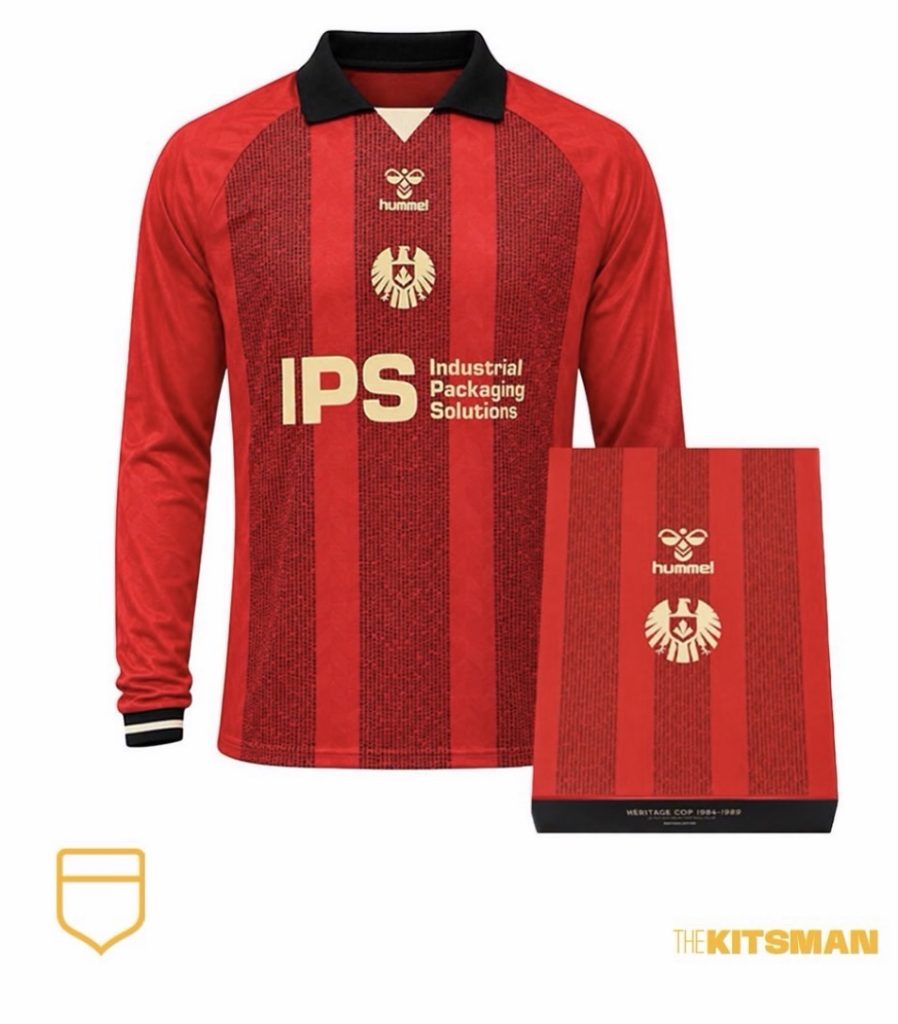
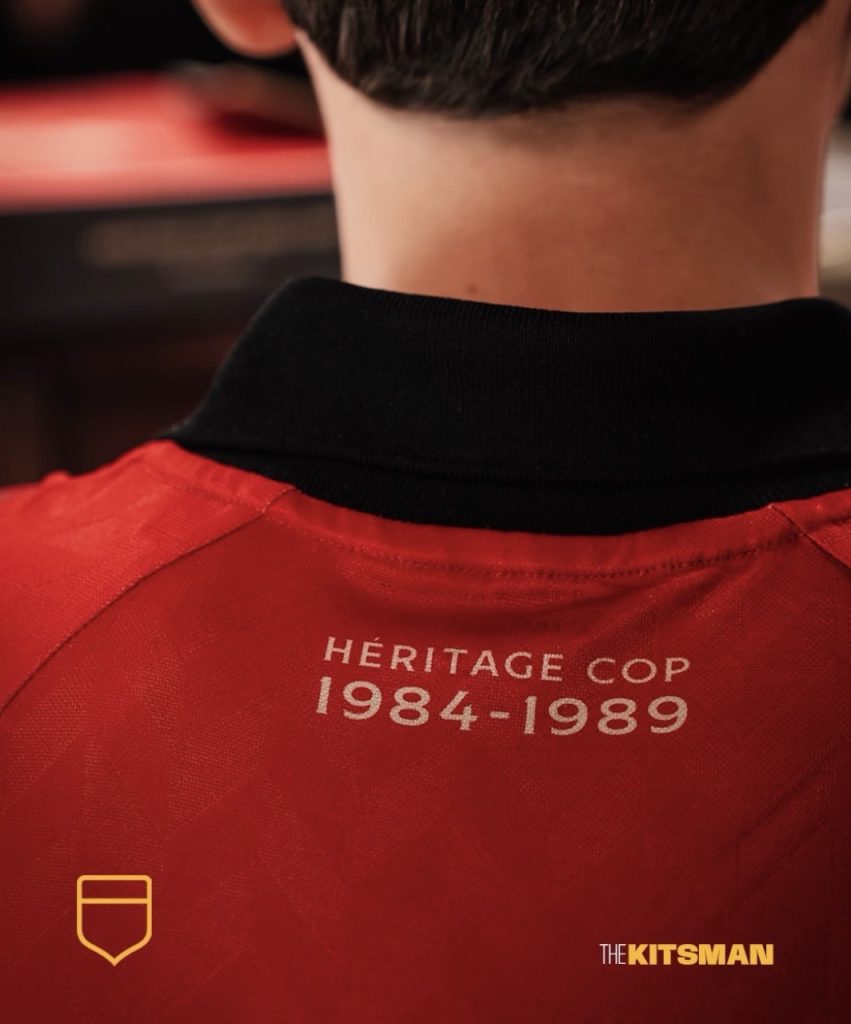
Their new 2026/27 Hummel third shirt, named Héritage, celebrates five seasons spent in France’s second division between 1984 and 1989, when the club competed as COP Le Puy.
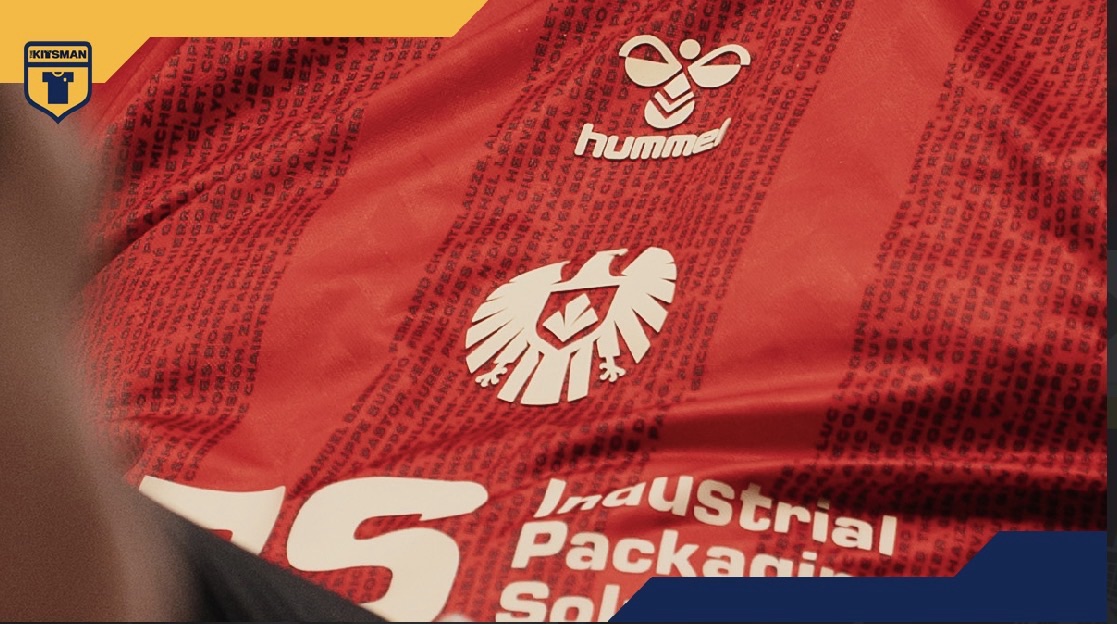
The red-and-black stripes recreate the colours of that era, complete with a traditional collar and subtle detailing. It’s an attractive retro shirt, but the cleverest feature is almost impossible to appreciate from a distance.
The black stripes contain the names of every player, coach and president involved during those five seasons.
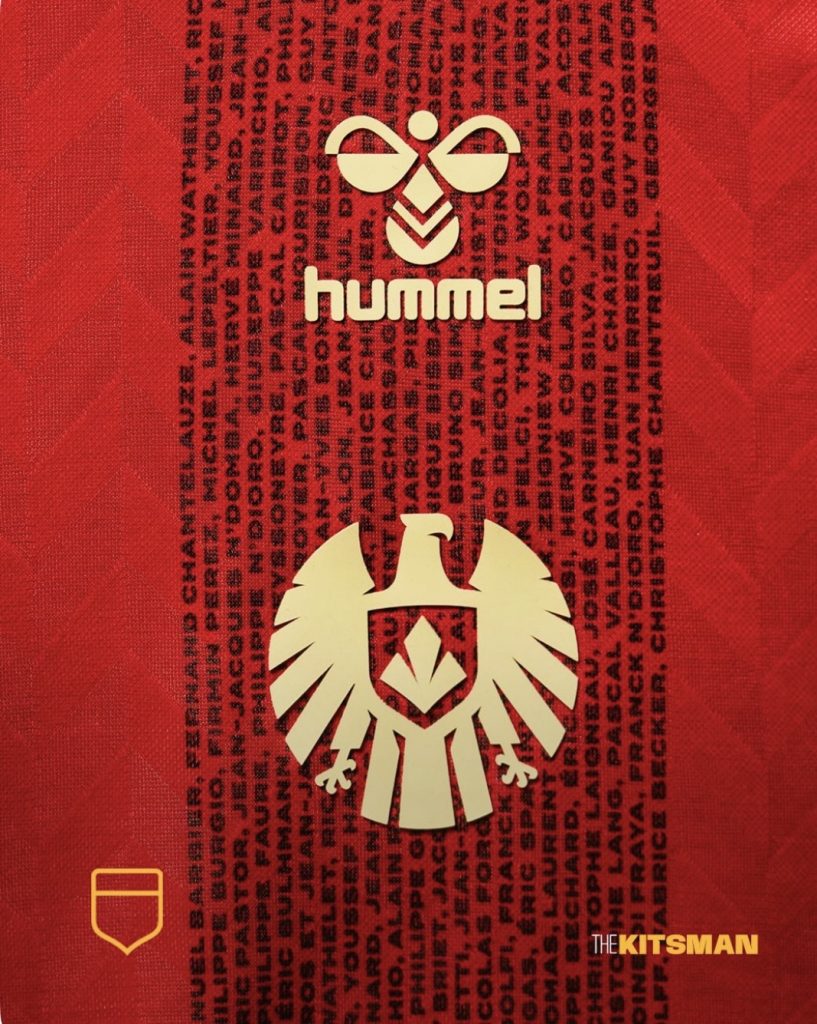
Not simply the most famous footballers or the men who scored the important goals. Everyone who contributed to that chapter of the club’s history.
It’s a wonderful idea, and one that raises a question about how football remembers its past.
Remembering More Than the Famous Names
What makes this release particularly appealing is the campaign surrounding it.
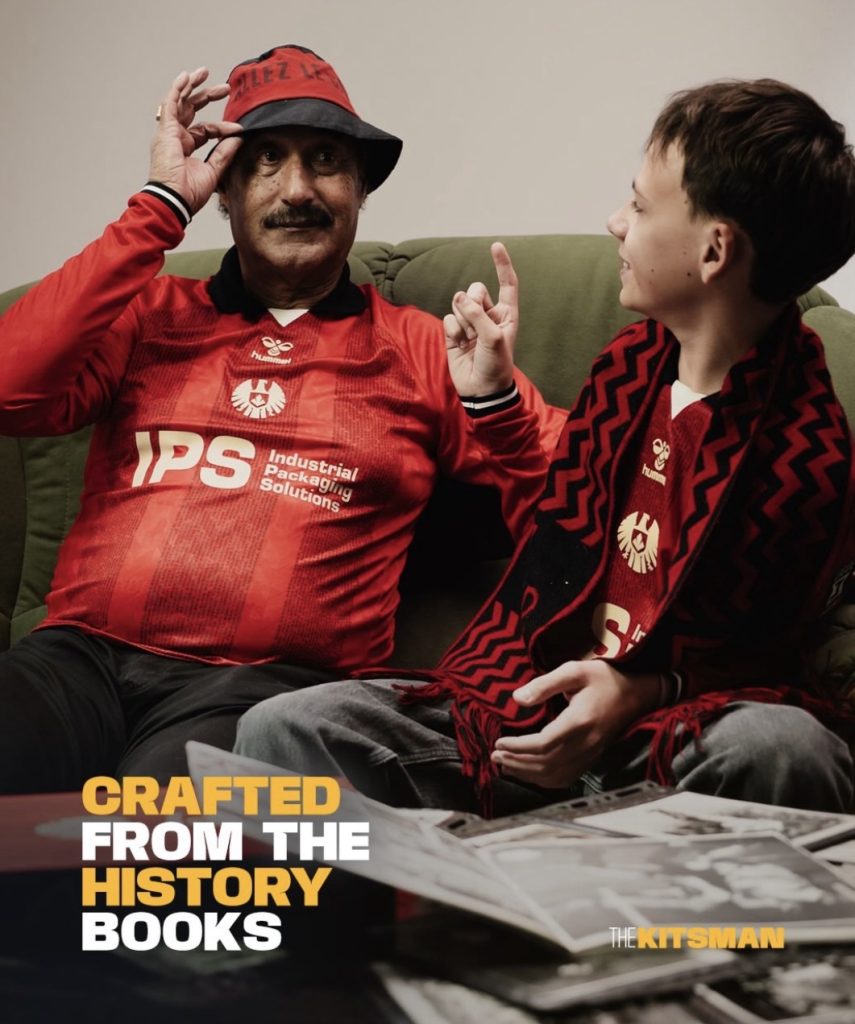
Former players Carlos Acosta and Michel Lepeltier feature in the launch, bringing the club’s past and present together.
The photographs feel refreshingly different from the usual football shirt launch. Rather than models posing in an abandoned warehouse or players staring seriously into the distance, there’s a genuine sense of connection between generations.
For supporters who followed COP Le Puy during the 1980s, those five seasons in Division 2 represent a significant part of their footballing lives.
For younger fans, the shirt offers an introduction to people and achievements they might otherwise know very little about.
The club’s official announcement of the Héritage shirt even lists the individuals whose names appear in the design.
There’s something rather satisfying about that. The people responsible for an important period of the club’s history haven’t simply inspired a marketing campaign. They’ve become part of the shirt itself.
When Does a Heritage Shirt Actually Mean Something?
We’ve covered plenty of anniversary and heritage-inspired shirts at The Kitsman.
Willem II’s 130th-anniversary home shirt, for example, demonstrated how effective it can be to preserve a club’s familiar identity. Meyba kept the traditional red, white and blue stripes, with a vintage crest and an unusually clean front thanks to the club’s sponsorship arrangements.
It’s a different approach from Le Puy, but both designs understand something important: supporters don’t necessarily want their club’s history reinvented every summer.
They want it respected.
Of course, not every shirt needs to feature dozens of names or celebrate a forgotten season. Some of the finest football shirts have no elaborate backstory whatsoever.
We’ve previously questioned whether every football shirt really needs a story, particularly when the explanation seems more ambitious than the design.
Le Puy’s release is an example of when the story genuinely adds something.
Without the historical connection, it’s a smart red-and-black Hummel shirt. With it, the design becomes a tribute to an entire generation of people associated with the club.
That feels considerably more worthwhile than attaching a vague historical reference to an otherwise ordinary pattern.
What About the Players Nobody Remembers?
Football is very good at celebrating legends.
Statues, murals, testimonial matches and commemorative shirts tend to recognise the biggest names. Understandably so. Those players often provided supporters with their greatest memories.
But what about the dependable defender who spent six seasons at a club without ever becoming a star? The manager who kept a struggling team afloat? The people who helped establish a club’s identity long before its most successful years?
Their contributions matter too.
Le Puy haven’t attempted to rank the importance of everyone involved between 1984 and 1989. They’ve recognised the collective achievement.
There’s a commercial side, naturally. The club is selling the standard shirt and has also produced a collector’s box containing a numbered long-sleeved version, limited to 43 examples.
Nobody should pretend football shirts are suddenly acts of charity.
But if clubs are going to sell us another piece of their history, wouldn’t it be nice if more of them put this much thought into whose history they’re celebrating?
Le Puy-en-Velay have produced an excellent shirt. More importantly, they’ve reminded us that football clubs are built by considerably more people than those whose names appear on the honours board.
Would you like your club to release a shirt celebrating former players, coaches and staff? And which overlooked era of your club’s history deserves that recognition?
Follow The Kitsman for more football shirt news, features and opinions: