
Football shirts have caused plenty of arguments over the years. Usually, it’s supporters complaining about a sponsor, a questionable colour choice or the price of yet another new release.
Occasionally, though, a shirt causes considerably more trouble.
Manchester United once changed their entire kit at half-time because their manager believed the players couldn’t see each other. Fiorentina withdrew a design after an offensive symbol was spotted in its pattern. Cameroon managed to upset FIFA twice in three years, eventually finding themselves facing a six-point World Cup qualifying deduction over a football kit.
These four shirts went well beyond the usual arguments about whether a design looked any good.
1. Manchester United 1995/96: The grey shirt Ferguson couldn’t stand
On 13 April 1996, Manchester United travelled to Southampton chasing the Premier League title. By half-time, they were 3-0 down and Sir Alex Ferguson had apparently identified one of the problems.
Their shirts.
🛒—-> https://fas.st/t/vtjbj43g
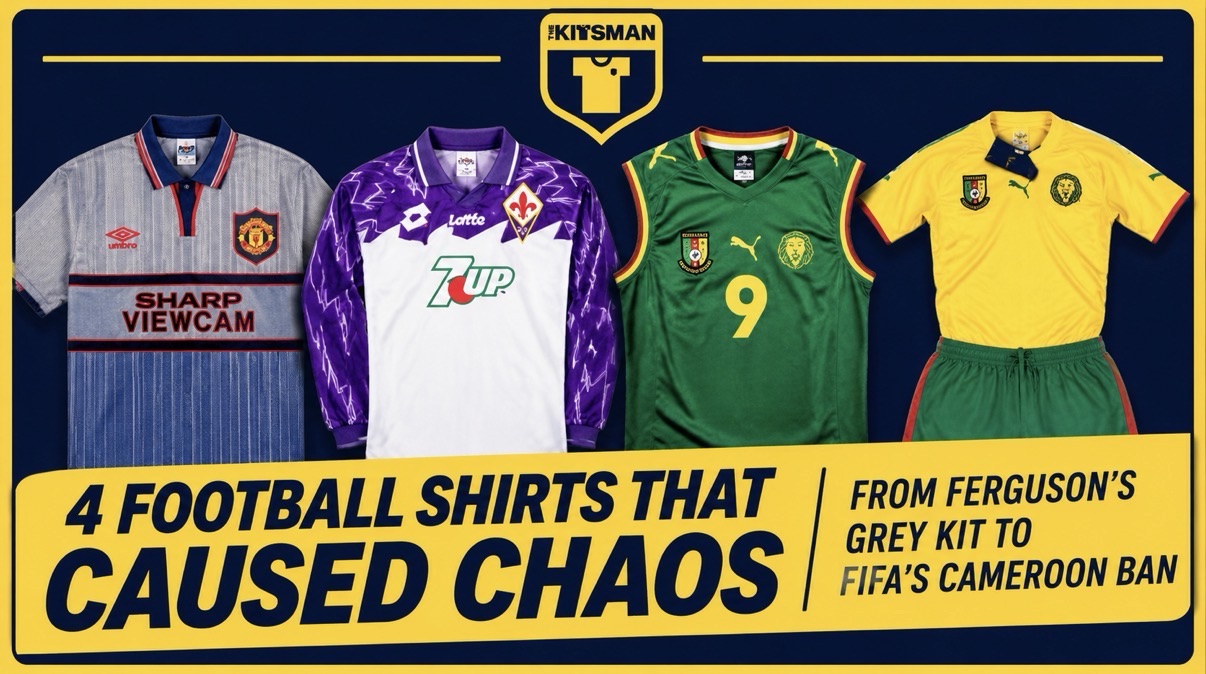
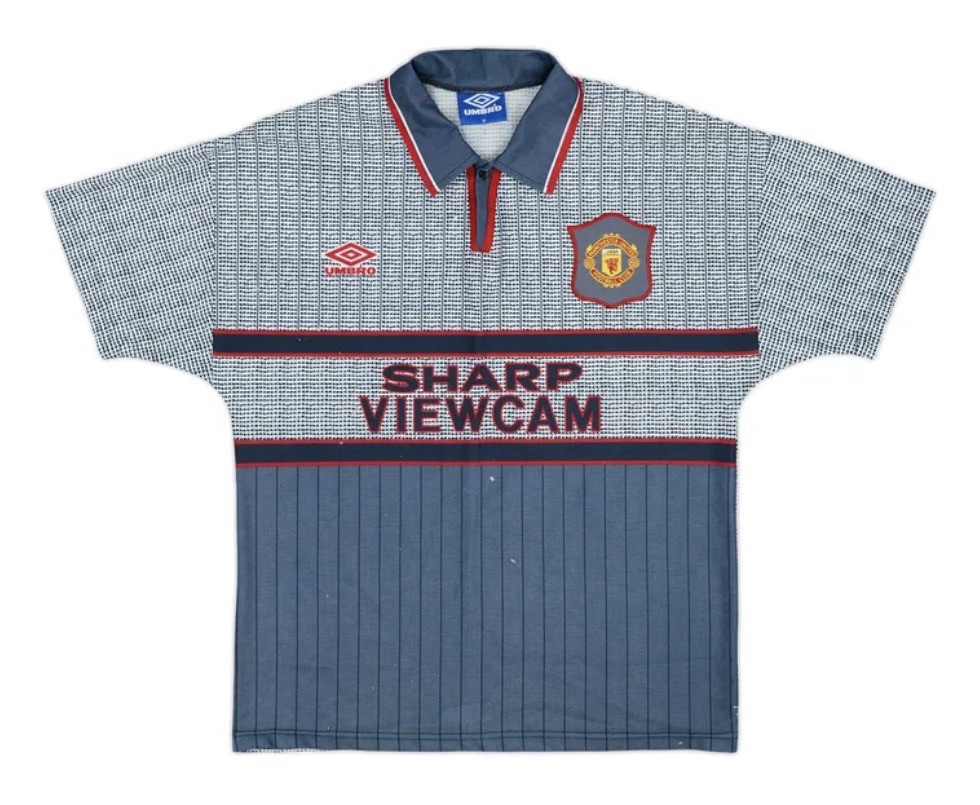
United were wearing Umbro’s now-infamous grey away kit, featuring a patterned upper section, blue-grey lower half and Sharp Viewcam sponsorship.
Ferguson believed the colour made it difficult for his players to distinguish their teammates against the crowd. Rather than wait until the next match to do something about it, he ordered them to change into their blue-and-white third kit during the interval.
It remains one of the strangest half-time decisions in Premier League history.
United improved after the break, although Ryan Giggs’ late goal did little to disguise a 3-1 defeat. Southampton’s Matt Le Tissier subsequently dismissed the shirt explanation, while Gary Neville later revealed that Ferguson’s concerns were influenced by work with a visual-awareness specialist.
The grey kit had already developed a dreadful record. United failed to win any of the five matches in which they wore it, losing four and drawing one.
The club subsequently withdrew it, with Ferguson’s impromptu change also earning United a £10,000 fine.
There’s something wonderfully ironic about a shirt once considered unsuitable for professional football becoming one of the most recognisable Manchester United designs of the 1990s.
The grey kit didn’t stop United winning the league and FA Cup Double that season. It did, however, become more famous than plenty of shirts they actually won trophies in.
2. Fiorentina 1992/93: The pattern that should never have made it onto a shirt
Fiorentina’s 1992/93 away shirt initially looked like another ambitious early-1990s design.
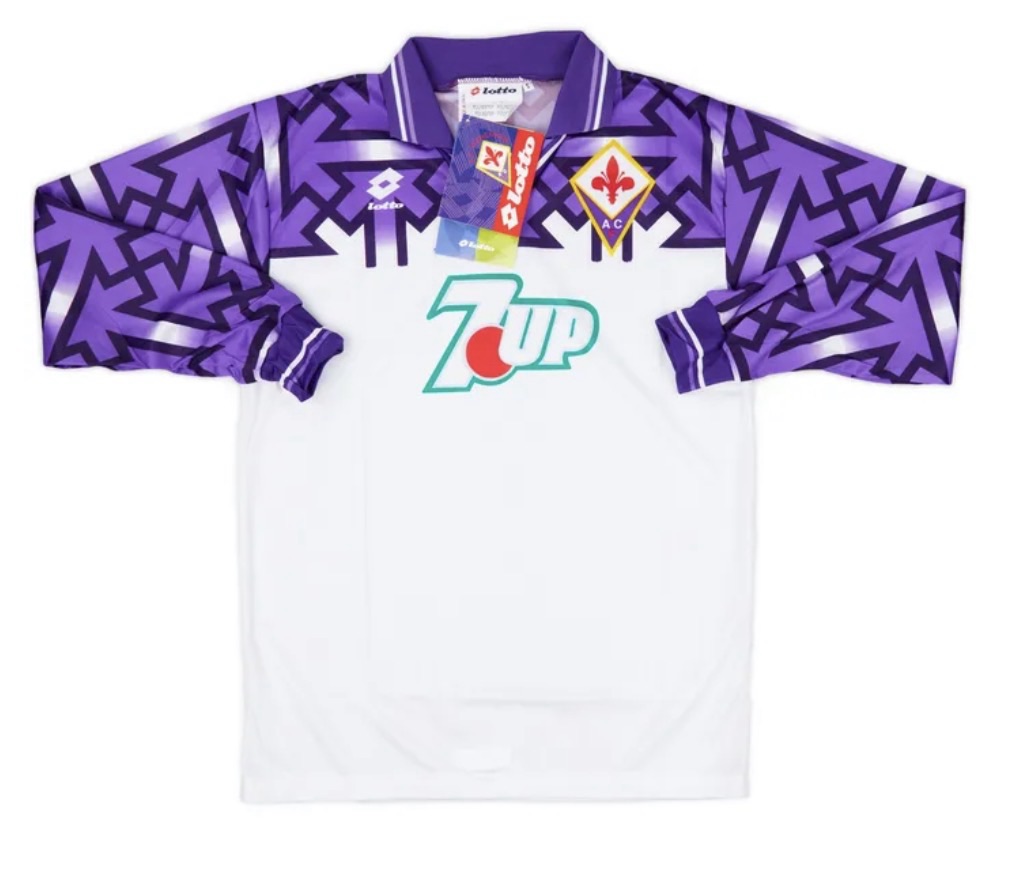
Manufactured by Lotto, it featured a white body, purple geometric detailing and the unmistakable 7UP sponsor.
There was just one enormous problem.
The arrangement of shapes within the original pattern created images resembling swastikas.
It wasn’t a minor complaint about an unfortunate colour combination. The resemblance to Nazi symbolism made the shirt impossible to defend, and Fiorentina withdrew the design during the season.
The club and Lotto maintained that the effect was entirely accidental.
The shirt was replaced by a revised design that retained the purple-and-white colour scheme without the offending arrangement.
The replacement is an interesting piece of football shirt history in its own right. Its appearance is tied directly to a design controversy that should have been identified long before the original shirt reached the pitch.
What makes this episode particularly remarkable is the number of stages a football shirt must pass through before reaching professional players.
Designers, manufacturers, club officials and commercial departments all had opportunities to examine the pattern.
Somehow, the problem survived until the shirt was already being worn.
The original has since become notorious among collectors, although its historical significance is rather different from the usual nostalgia surrounding 1990s football shirts.
3. Cameroon 2002: The sleeveless shirt FIFA wouldn’t allow at the World Cup
Cameroon arrived at the 2002 Africa Cup of Nations wearing something football had rarely seen at international level.
A sleeveless shirt.
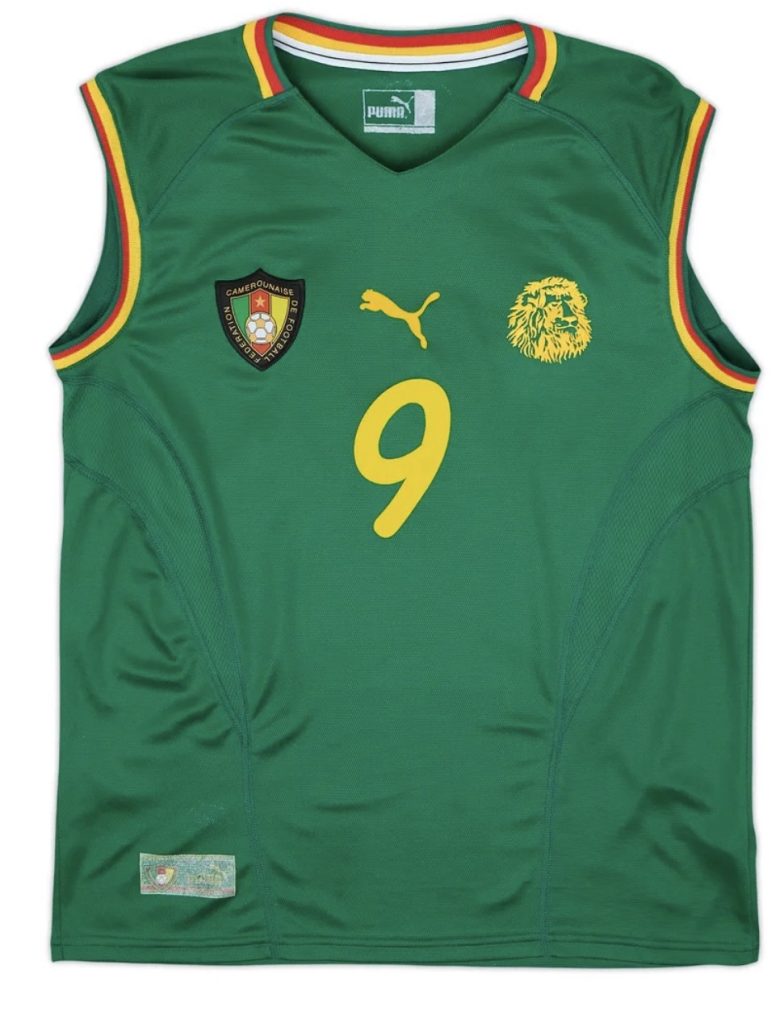
Puma had effectively removed the sleeves altogether, creating a green jersey that looked closer to basketball clothing than a conventional football top.
The design retained Cameroon’s national colours and featured a prominent lion emblem alongside the federation crest.
It was unmistakably Cameroon, even without the sleeves.
The players appeared perfectly comfortable wearing it. Cameroon went on to win the tournament, beating Senegal on penalties in the final.
FIFA was considerably less enthusiastic.
The governing body objected to the sleeveless construction, and Cameroon were prevented from using the original design at the 2002 World Cup.
Puma’s solution was almost comical. Black mesh sleeves were introduced, technically restoring the missing part of the shirt while preserving much of its original appearance.
It was an unusually inventive response to a fairly straightforward instruction.
The controversy also raised an interesting question. If the players were comfortable, the numbers were visible and the teams could be distinguished, what exactly was wrong with removing the sleeves?
FIFA had its regulations, but Puma had demonstrated how much room there was to challenge the traditional appearance of a football kit.
As it turned out, the manufacturer was only getting started.
4. Cameroon 2004: The one-piece kit that nearly cost six World Cup qualifying points
Two years after the sleeveless controversy, Puma returned with something even more ambitious.
This time, Cameroon didn’t need separate shirts and shorts at all.
The manufacturer introduced a one-piece football kit, joining the shirt and shorts together into a single garment. The design featured claw-mark detailing and was worn during the 2004 Africa Cup of Nations.
The yellow away version pictured here demonstrates just how unusual the construction was.
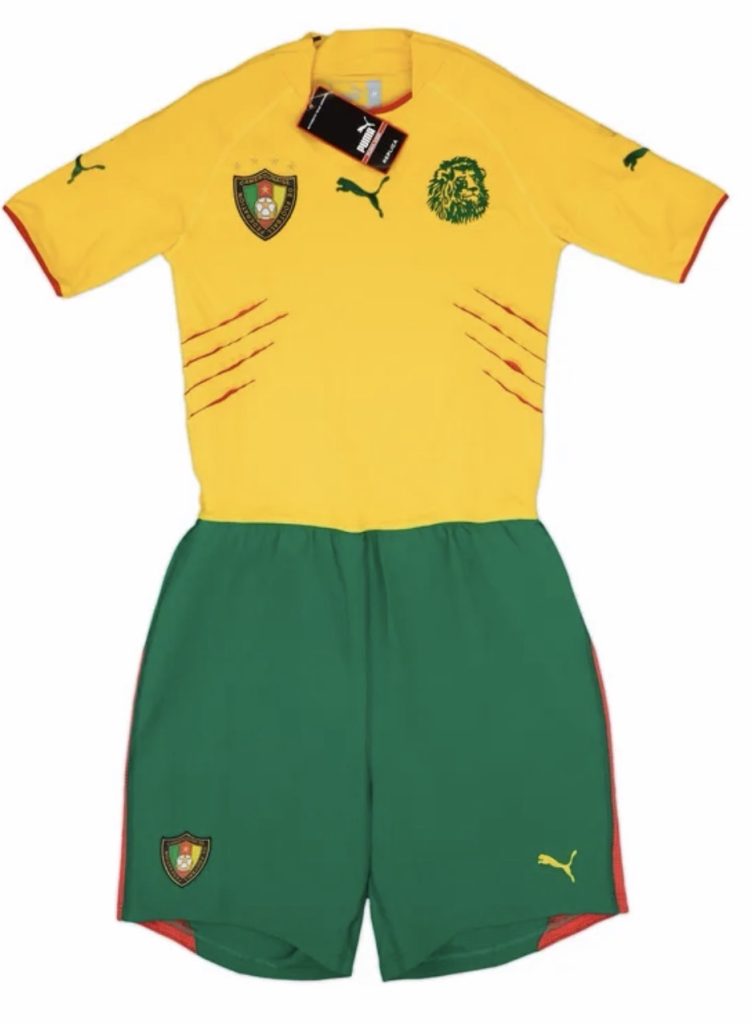
FIFA objected, insisting that Cameroon return to conventional equipment for the knockout stages.
Cameroon continued wearing the one-piece kit, including during their quarter-final defeat to Nigeria.
The consequences were extraordinary.
FIFA imposed a fine of 200,000 Swiss francs and initially deducted six points from Cameroon’s forthcoming 2006 World Cup qualifying campaign.
Six points. Over a football kit.
That was no longer a disagreement about design. It was a punishment with potentially serious consequences for an entire national team’s World Cup ambitions.
The dispute escalated, with Puma challenging FIFA’s position and Cameroon appealing the sanctions.
In May 2004, FIFA restored the six qualifying points, although the financial penalty remained. A German court subsequently ruled in Puma’s favour in a separate legal dispute over the one-piece design.
It’s difficult to imagine a modern kit launch generating quite that sequence of events.
Puma had managed to turn a football shirt into a dispute involving international regulations, disciplinary sanctions and the courts.
The design itself was certainly unusual. Whether it justified threatening Cameroon’s World Cup qualification is another matter entirely.
When football shirts became bigger than football
What’s striking about these four examples is how differently the trouble started.
Manchester United’s grey shirt was abandoned by its own manager. Fiorentina’s design was withdrawn because of an offensive pattern. Cameroon’s shirts challenged the regulations governing what players were allowed to wear.
None of them became famous simply because they were attractive.
They became famous because something went wrong, somebody objected or somebody refused to back down.
Football shirt culture tends to celebrate successful designs, but the failures and controversies can be just as fascinating.
Thirty years after Ferguson ordered his players to change at half-time, people are still talking about that grey Umbro shirt.
You wonder whether anyone at Umbro could have imagined a better way to make it unforgettable.
For more football shirt history, kit releases and opinions, follow The Kitsman on X and Instagram.
